
Data centres require a robust and reliable below-ground waterproofing strategy to protect critical infrastructure and essential high-value assets. Continuous operation, regulatory compliance and long-term resilience depend on basement structures performing exactly as designed throughout the building lifecycle.
Data centre basements, lift pits, foundations and service tunnels are all exposed to groundwater pressure, ground gases and potential structural movement. If these risks are not properly managed at the design stage, the consequences can extend far beyond localised defects.
Water ingress, gas migration, or movement-related failure can simultaneously disrupt power, cooling, and connectivity functions within data centres, resulting in operational risk, asset damage, and costly remediation processes.
In facilities with exceptionally high energy demand and minimal tolerance for downtime, the tolerance for substructure failure is effectively zero.
Managing risk in below-ground data centres is therefore not a product decision. It is a design and engineering discipline that must be addressed early, coordinated holistically and verified against proven standards and performance criteria.
Why Data Centres Require a Different Substructure Design Approach
Data centres operate continuously, with minimal tolerance for unplanned intervention. Below-ground defects are particularly problematic because:
- they are concealed once construction is complete
- access is restricted in live environments, and
- remedial works often require operational compromise.
In facilities supporting advanced computing and AI workloads, these are digital infrastructure services of national importance. Their protection is therefore crucial to operational resilience and economic continuity.
Concentration of Critical Infrastructure Below Ground
Below-ground zones typically accommodate high-value systems, including:
- Electrical distribution, substations and containment
- Cooling systems, drainage and pipework
- Fuel storage and associated services
- Fibre, data and communications routes
These systems are highly sensitive to moisture, corrosion and contamination. Even low-level ingress can accelerate degradation, shorten asset life and increase operational risk.
In environments that are crucial to national computing capacity, below-ground failure becomes a strategic issue rather than a localised defect.
Complex Structures Increase Probability of Failure
Data centre substructures are rarely simple. They frequently include deep basements, piled foundations, service tunnels, plant corridors, lift pits, trenches, and sumps, along with a high number of service penetrations and movement joints.
Each interface introduces risk. Without coordinated design, these risks compound across the structure, increasing the likelihood of long-term failure.
Urban and Brownfield Sites Increases Risk
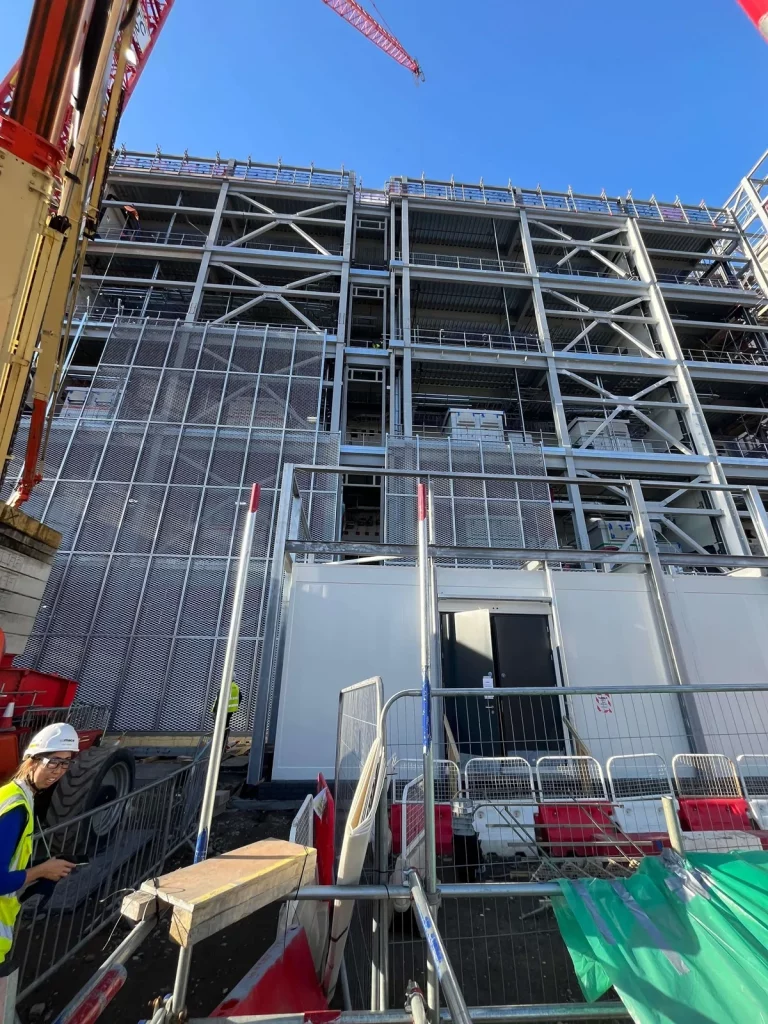
Many UK data centre projects are designed and delivered on constrained urban or brownfield sites. These sites frequently present:
- High or variable groundwater levels
- Made ground and contaminated ground
- Variable soil strata
- Proximity to existing infrastructure
Each of these conditions increases the risk to the new substructure, demanding coordinated and detailed design rather than reactive mitigation.
Design-Led Risk Management, Not Reactive Solutions
Standards such as the British Standard for waterproofing, BS 8102:2022 establish principles for protecting below-ground structures from water ingress.
However, data centres demand a higher level of assurance than minimum compliance. Extended design life expectations, high-value internal environments, zero tolerance for disruption, and their status as critical national infrastructure means that minimum compliance creates an unacceptable level of uncertainty.
Effective data centre risk management must therefore adopt a performance-led approach rather than just adhering to a checklist. In this context, below-ground waterproofing and gas protection cannot be treated as a secondary package or delegated detail; it must be engineered as an integral component of the project’s resilience strategy.
RIBA Stage Integration: Where Below-Ground Risk Must Be Addressed
The RIBA Stages and the RIBA Plan of Work come into play when integrating waterproofing into your design:
RIBA Stage 2 – Concept Design
- Site risk appraisal (groundwater, contamination, ground gases)
- Agreement on the strategic waterproofing approach
- Alignment on structural design and the strategy for protection
- Early water management and discharge considerations (particularly in areas with high ground water levels)
Failure to coordinate at Stage 2 can create avoidable constraints and increased risks in future.
RIBA Stage 3 – Spatial Coordination
- Establish a strategy for construction joint detailing and sealing
- Agree on the approach to managing service penetrations
- Define how both gas protection and waterproofing will be integrated
- Drainage and sump system strategy established
It is important to get strategic alignment at this stage, as once the concrete is cast and services installed, product options become constrained if they aren’t already defined.
RIBA Stage 4 – Technical Design
- Full interface detailing
- Verify compatibility and continuity between different systems
- Define clear responsibilities and liabilities within the project design team
- Establish ongoing inspection and verification requirements
This detailed level of technical design is essential, as one of the most common causes of substructure failure is incorrect design decisions, rather than material performance.
Waterproofing Design Support
Book A Design Consultation
Our team will design a bespoke waterproofing specification for your application, design stage, and performance requirements
A Coordinated Below-Ground Protection Strategy
Below-ground risk management for data centres must address three interrelated hazards: water ingress, ground gas migration, and ground movement or heave.
These risks rarely act in isolation, as they will share pathways, affecting common interfaces and construction details. For that reason, these risks require a single, coordinated system rather than independent solutions applied by separate trades.
A fragmented approach increases the likelihood of discontinuity, whereas a coordinated approach from an early stage will establish:
- Waterproofing strategies to align with structural form and sequencing
- Joint and service penetration sealing to be resolved before construction
- Gas and ground movement protection to be integrated without conflict
Waterproofing: Controlling Water Under Pressure
Groundwater conditions, hydrostatic pressure and construction sequencing vary significantly between sites. Furthermore, in urban and brownfield environments unpredictability is often the rule rather than the exception.
Robust data centre waterproofing strategies typically combine structural waterproofing systems through:
- water-resistant concrete and admixtures
- fully bonded or pre-applied membrane systems that limit lateral tracking, and
- maintainable internal protection where inspection access is required.
Providing multiple barriers to water and gas is not excessive – in high-value digital infrastructure, it is a requirement to ensure comprehensive protection as well as compliance with British Standards and insurance demands.
Layered protection reduces the potential impact of localised defects and limits the risk of failure.
Joints and Penetrations as Primary Risk Points
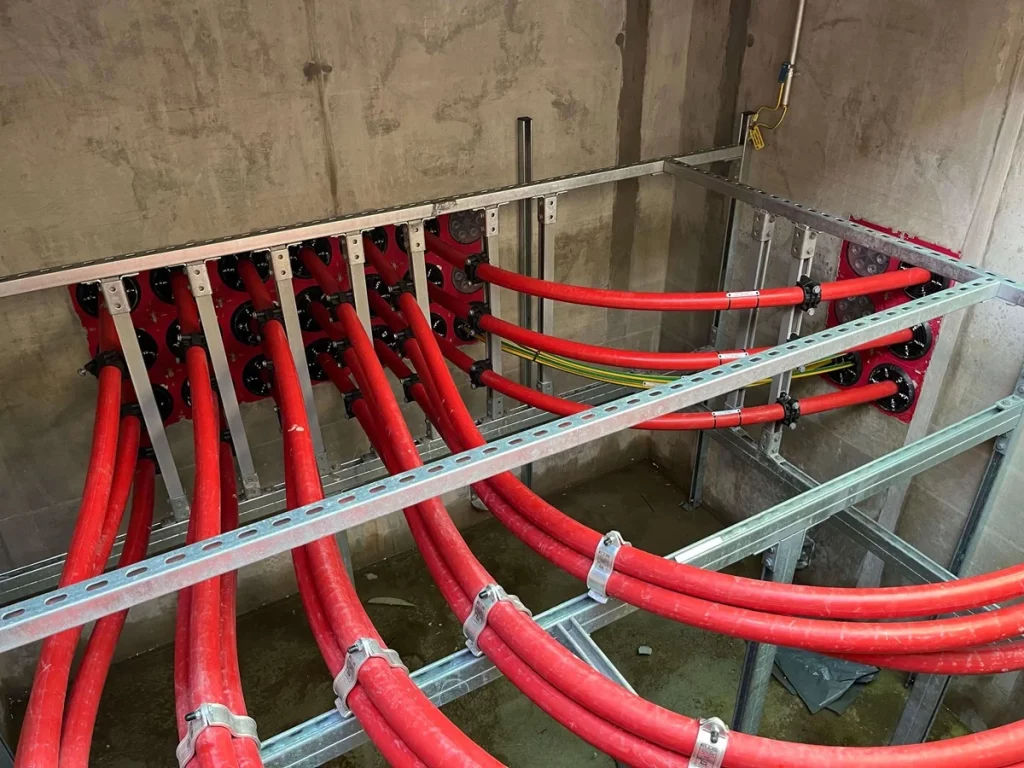
Water ingress most commonly occurs at interfaces and penetrations rather than through a body of well-designed and well-placed concrete. Construction joints, movement joints, service penetrations and slab-to-wall transitions represent inherent vulnerabilities in the substructure.
These details should be addressed as a priority within the overall waterproofing strategy, not just treated as secondary considerations.
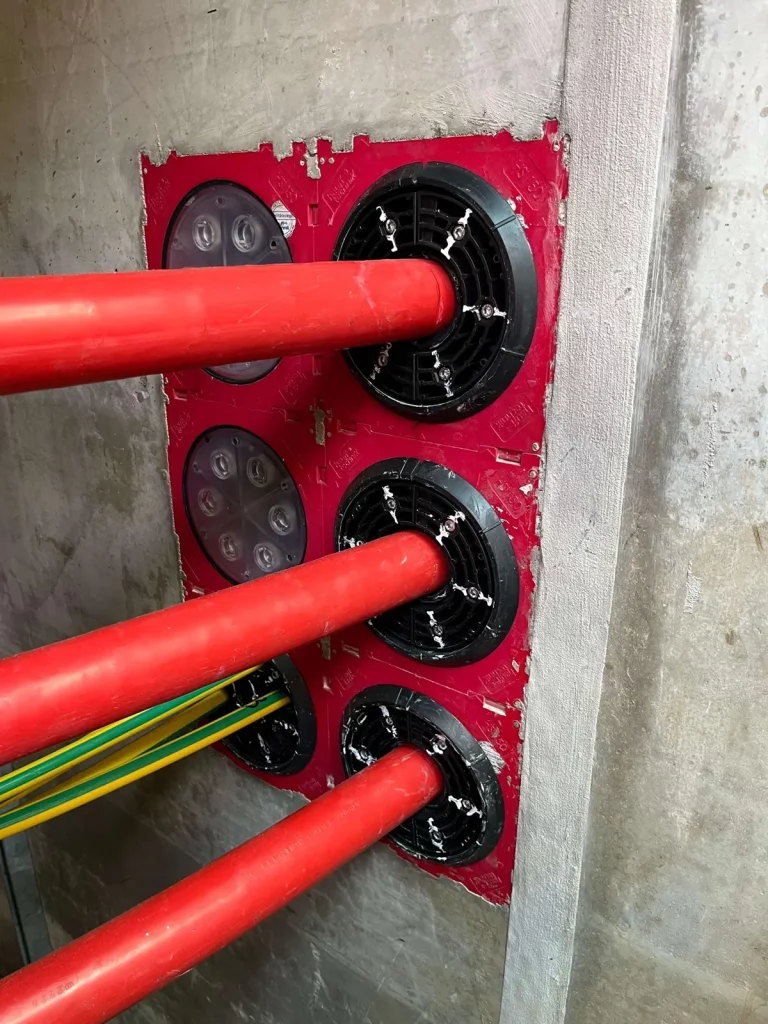
Depending on the structural design and project requirements, products such as waterbars, injection hoses, joint sealing systems and specialist penetration seals are essential to maintaining the continuity of protection under hydrostatic pressure.
Where these elements are not considered, poorly detailed or inadequately sequenced, the long-term performance of the waterproofing design will be at risk.
Gas Protection: Continuity and Verification
Ground gases such as methane, carbon dioxide and radon migrate through the same pathways as water. In below-ground data centre environments, this presents overlapping problems: water ingress causing damage to internal spaces and services, and exposure to hazardous ground gases creating significant health and safety risks.
Gas protection must therefore be fully integrated with the waterproofing design. Third-party certification of products, continuity of waterproofing systems, construction joint integrity, and penetration detailing must all address the risks of both water and gas migration.
Verification of the installed systems is also a critical requirement. Only through third-party inspection and testing will it be possible to confirm the effectiveness of the installed system at preventing dangerous ground gases from entering the below-ground space, before follow-on trades.
High-Risk Zones Within Data Centre Substructures
Certain areas of the substructure require greater attention due to depth, geometry, and service penetration entries.
Basements
Basements should be designed for worst-case groundwater conditions rather than historic averages or current conditions. Effective strategies incorporate different forms of waterproofing to provide multiple layers of protection, defined drainage and pumping capacities, and clearly established performance criteria aligned with the operational purpose of the basement.
Lift Pits, Trenches and Service Tunnels
These zones are typically the deepest parts of the structure and among the hardest to access once the structure is operational. They often accommodate concentrated services within restricted space, with complex structural designs and numerous construction joints creating a higher level of risk for water ingress, and a particularly tricky environment for application and detailing.
Limiting the exposure to this risk relies on an effective waterproofing strategy that is integrated into the schedule of work, allowing for effective and targeted detailing with appropriate products.
Interfaces and Edge Detailing
Transitions between structural elements remain among the most common failure locations. Changes in plane, interfaces between different substrates and accommodating movement details all require careful coordination.
Effective detailing ensures continuity of protection between different waterproofing systems and different structural components without a loss of integrity.
Specification, Accountability and Performance
Clear responsibility reduces risk. Fragmented liability between design and installation will increase the likelihood of gaps in the waterproofing strategy.
A specification-led approach such as the Waterproofing Design Partnership establishes:
- defined liability
- coordinated detailing with installation requirements, and
- verifiable performance criteria
This golden thread of information within the design process reduces ambiguity, de-risks the project and improves long-term accountability.
Where inspection access is required, a maintainable cavity drain ‘Type C’ waterproofing design allows for early easy inspection and maintenance without widespread operational disruption.
Engineering Certainty Below the Ground
Managing below-ground risk in data centres begins with disciplined design. By addressing water, gas, ground movement and other installation risks and requirements together at an early stage, substructures can deliver predictable performance throughout the data centre’s operational life.
The objective is not simply compliance with standards. It is engineered certainty: below-ground data centre infrastructure designed to support continuous operation, protect critical systems and sustain digital resilience.



Expert Installations by our Nationwide Network of Newton Specialist Basement Contractors.


Pass the Waterproofing Design Liability to Newton and our network of contractors
Trusted By































Speak to our friendly, expert team
Our staff are able to provide guidance for projects of all sizes, whether you require some general advice about damp or waterproofing, or support with technical drawings and specifications.