01732 496 523

Basement tanking is an investment for any homeowner, property developer, architect, or specifier tackling an existing basement conversion. It is also used for persistent water ingress. This is part of the reason why the basement tanking cost (or cellar tanking cost) can vary so much.
When considering such an investment, you might ask, “How much does basement tanking cost?” In any below-ground construction scenario where the structure is expected to be useful and/or habitable, effective waterproofing is essential. Many homeowners planning cellar refurbishments also want to understand the likely cellar tanking cost. Both approaches protect structures, belongings, and long-term property value.
But how much does basement tanking cost, and what factors influence the overall price? And how does this compare with the typical cellar tanking cost for smaller or older below-ground spaces? This guide provides a detailed breakdown of the key factors and expert advice to help guide your decision-making process.
What Is Basement Tanking?

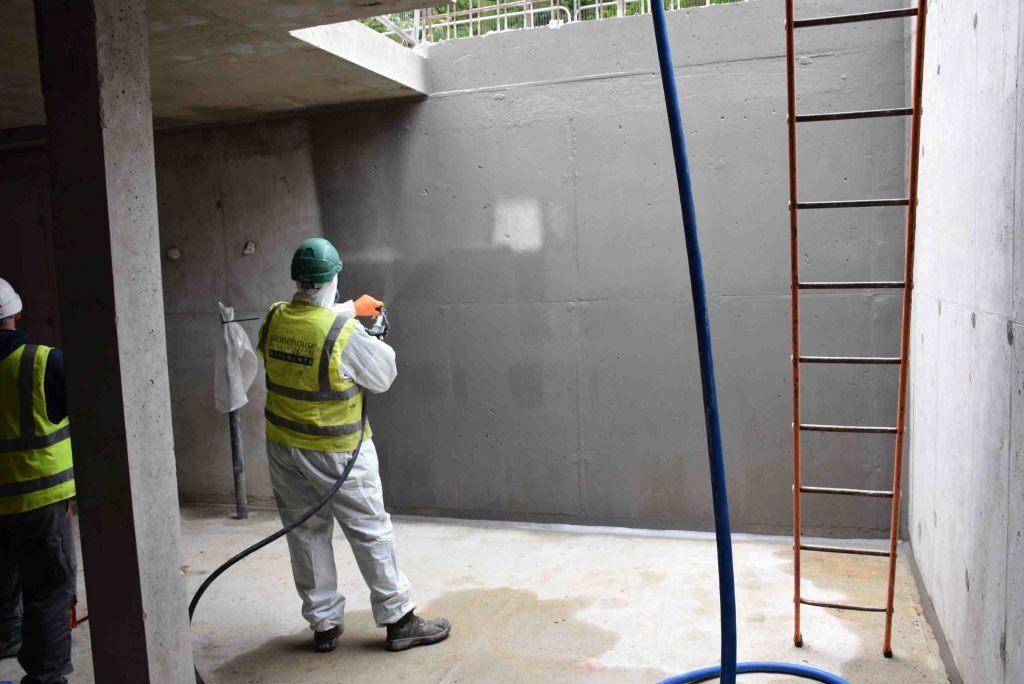
Basement tanking is a commonly used term for Type A barrier protection to a basement structure. It is defined by British Standard 8102:2022 as “barrier waterproofing”. This is where a continuous waterproofing layer prevents water from penetrating the structure.
Barrier waterproofing products can be applied to the internal (negative), external (positive), or sandwiched face of the basement walls and slab. This depends on the design. On existing basements and many cellar conversions, these products are often applied internally. They are applied as cement-based, liquid-applied slurries or renders. These are installed directly onto a correctly prepared substrate. They must form a strong, continuous bond so they can resist water pressure.
Because Type A systems rely on this bond and continuity, it is critical to select a suitable product for the structure and ensure that the substrate is prepared and detailed correctly.
Although tanking remains a widely used option for both new-build and refurbishment projects, modern basement design often favours Type C cavity drain systems for habitable spaces. This method is the cavity drain waterproofing system, otherwise known as ‘Type C’ waterproofing. Type C waterproofing manages ingressing water by collecting and safely evacuating it via drainage and pumps. Thus, it is frequently used in combination with Type A or Type B systems where the risk or consequence of failure is higher.
Combined Waterproofing for Enhanced Protection
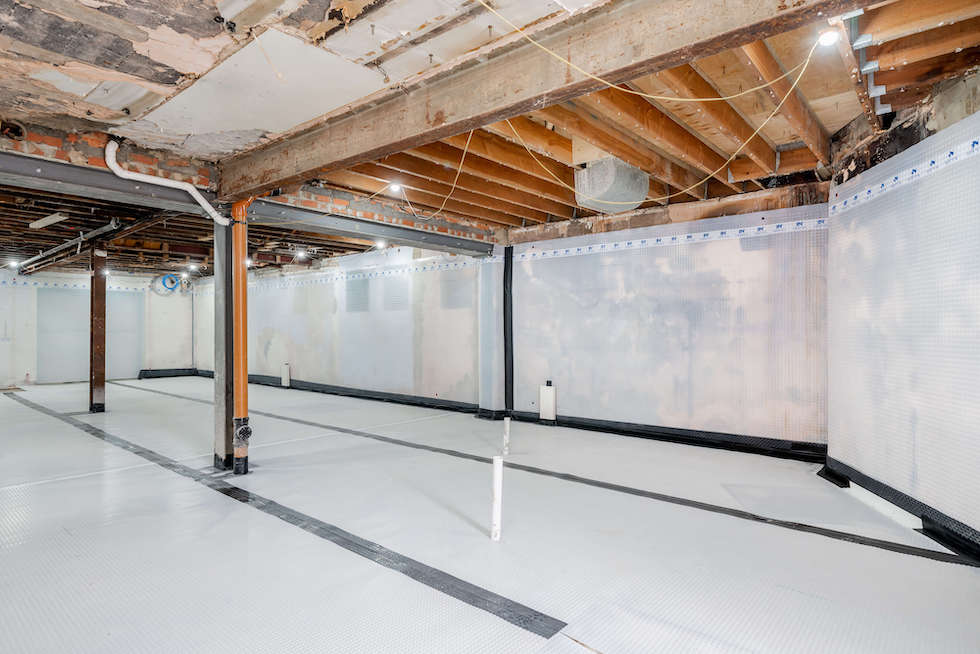
British Standard 8102:2022 defines Type C waterproofing as “drained protection”. This involves accepting the leaking water into voids created by the cavity drain system. These voids are strategically installed to the internal walls and floors of the structure. As a result, the system captures and depressurises incoming water before safely removing it from the property.
Unlike Type A waterproofing, Type C waterproofing does not resist water pressure. Therefore, it avoids common problems such as installation issues, preparation issues, and impact damage, which can affect Type A barriers and allow water to enter the structure.
Overall, basement tanking can deliver a robust barrier against moisture and water, transforming basements into dry, usable spaces. If you aim to create a habitable below-ground space, it is recommended to combine the tanking system with a Type C system. This provides multiple forms of protection and complies with recommendations within BS 8102:2022. The standard suggests that combined systems should be considered if the assessed risks are deemed high. It is also recommended if the consequences of failure to achieve the required internal environment are deemed too high.
Understanding Basement Tanking Costs in the UK
Basement tanking costs in the UK can vary significantly. Many variables and factors can affect the pricing. It is therefore extremely difficult to provide a guideline cost for basement tanking without knowing more about the specific details of individual projects. For smaller, below-ground areas, particularly older cellars, the cellar tanking cost can vary significantly due to differences in substrate condition and access constraints.
Several factors can influence the cost of a basement tanking project. These include the size and complexity of the basement area, the desired end use of the space, and the chosen waterproofing method (s). Additionally, the condition and age of the building structure, as well as the level of risk from water and/or ground gases, can affect costs. Even regional labour costs can impact the overall pricing.
Here’s a more detailed look at some of the key factors affecting basement tanking costs.
Key Factors Affecting Basement Tanking Costs
- Basement Size: Larger basements naturally need more materials and labour, increasing the overall cost.
- Basements Purpose: What will the space be used for? A plant room may tolerate dampness, require no ventilation, and only need a single waterproofing method. A home cinema, gym, or bedroom needs a fully dry environment, multiple waterproofing measures for robust protection, and mechanical ventilation.
- Waterproofing Method: Type A tanking is often cheaper per square metre than Type C cavity drain membranes, but substrate preparation to achieve the required bond varies. Cavity drain systems are widely regarded as the safest option and are commonly recommended in conjunction with tanking for habitable rooms below ground.
- Type of Structure: Is it a conversion, extension, or new build? Is it underpinned? Is the structure reinforced concrete or brickwork? Is the property historic or modern? These factors heavily influence which products can be specified and installed.
- Basement Condition: Tanking systems demand thorough preparation. Existing issues, such as active water leaks or required structural repairs, must be addressed first, which adds to the total cost.
- Location: A basement on a hillside with low groundwater risk and simple gravity drainage may require less extensive protection. In contrast, low-lying urban locations with higher risks from groundwater, surface water, or burst mains often need more comprehensive systems.
- Labour Costs: Labour varies by region. Projects in London and the South East typically incur higher costs.
- Complexity: Irregular layouts, vaulted ceilings, or restricted access increase installation time and labour demands, raising project costs.

How to Get a Price for a Basement Tanking Project
The only sure-fire way to get an accurate cost for a basement tanking project that accounts for as many variables as possible, is to speak to an independent, experienced and qualified specialist waterproofing contractor.
Members of the Newton Specialist Basement Contractor (NSBC) network are required to fulfil strict membership criteria to demonstrate their expertise. They must qualify as NSBCs. This includes carrying the Certificated Surveyor in Structural Waterproofing (CSSW) qualification. It is provided by the Property Care Association (PCA). They must also undergo independent insurance and financial vetting processes. Additionally, they must meet other requirements.
The result is that Newton Specialist Contractors can:
- Provide independent, no-obligation quotations for basement tanking projects
- Take responsibility for both the design and the installation of a waterproofing system
- Give meaningful, insurance-backed installation guarantees for the work that they undertake
Work With Newton Waterproofing Today
Ready to specify a robust basement tanking solution? Contact Newton Waterproofing’s technical team for expert advice, product recommendations, or a full list of qualified specialist basement contractors that operate in your area. Our specialist contractors deliver reliable, guaranteed installations across the UK. They ensure your basement conversion or structural waterproofing project is completed to the highest standard.


Expert Installations by our Nationwide Network of Newton Specialist Basement Contractors.


Pass the Waterproofing Design Liability to Newton and our network of contractors
Speak to our friendly, expert team
Our staff are able to provide guidance for projects of all sizes, whether you require some general advice about damp or waterproofing, or support with technical drawings and specifications.