01732 496 523

Rising damp is a common problem and if you ignore it, it can become serious. Rising damp that reaches the walls of habitable rooms always needs treatment.
Left unchecked, it can cause:
- Spoiling of internal finishes
- Freeze/thaw damage to the building fabric
- Reduced thermal performance of the structure
- Increased levels of air humidity
- Increased risk of condensation
- Black mould growth
- Negative health effects for occupants
What Causes Rising Damp?
Most building materials are porous. When these materials touch a source of moisture, such as damp ground at the base of walls, the water enters their pores. Because water has surface tension, it climbs upwards into the wall through a process known as capillary action. This is the essence of what causes rising damp in structures.
Several factors influence how far the moisture rises in the wall, including:
- Wall thickness
- Porosity and type of the building material
- Level of soil saturation
- Rate of evaporation
In the UK, with standard wall construction, rising damp will generally rise to about 1m to 1.2m above ground level, but with thicker stone walls such as sandstone, rising damp may be seen at 1.5m or sometimes even higher.
Hygroscopic Salts?
Groundwater dissolves soluble elements in the soil, such as calcium, nitrogen, phosphorus, potassium, and sulphur. As the water rises within the wall, it carries these elements with it. When evaporation occurs, the salts remain behind and accumulate in the pores of the wall. This often appears as efflorescence, commonly referred to as salting.
Like table salt, these elements are hygroscopic, meaning they attract moisture from the air. Even if you cut off the source of groundwater, the wall may still feel damp because the salts continue to draw humidity from the air.
Salts can accumulate between the wall and finishes, such as plaster or render. As they crystallise, they expand and cause the finishes to fail, leading to delamination, cracking, or crumbling. To solve this problem of rising damp effectively, you must remove any contaminated plaster and render, even after the rising damp has stopped.
How To Treat Rising Damp?
1. Stop the Rising Moisture at its Source
New buildings include a damp-proof course (DPC) such as Newton 809-DPC. Installing a new physical DPC in an existing structure is usually expensive and impractical, so an alternative is needed.
The most practical and cost-effective solution is to inject a chemical DPC into the mortar bed. The chemical spreads through the mortar to form a barrier that blocks rising moisture. This method prevents rising damp, and most Newton Specialist Basement Contractors (NSBC) are trained to carry out this process.
2. Reinstating Plaster or Render
Although a new DPC works almost immediately, salts can remain within the wall fabric. These salts attract humidity from the air, so the wall may still appear damp. To protect internal finishes from further rising damp issues, you must remove contaminated plaster or render.
Protecting the wall finishes with a Membrane
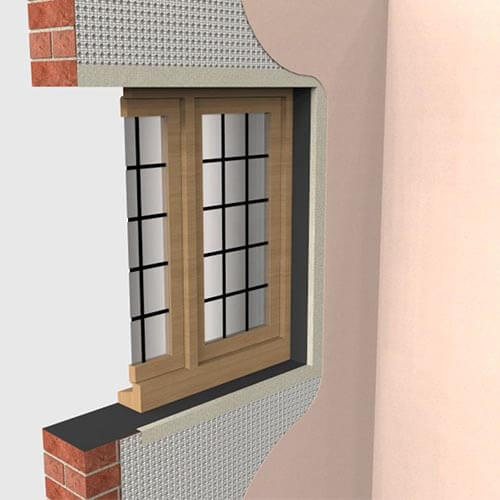
Often, the most effective solutions use a combination of products. For example, the use of a barrier membrane such as Newtonite Lath allows for wall finishes to be applied and even where the wall is contaminated by ground salting and can be used in conjunction with injected DPCs. This is useful when the wait time for the wall to dry out is not practical.
In some situations, it may not be possible, practical, or recommended to inject a chemical DPC. A wall membrane such as Newtonite Lath may be the only solution available.

Newtonite Lath features a meshed surface that provides a mechanical key, allowing for the direct application of plasters and renders and plasterboard using a dabbing compound.
Whether a DPC has been successfully installed or not, Newtonite Lath will isolate and protect the internal finishes from capillary held dampness and the damaging effects of crystallising effloresce, effectively combating rising damp.
The PCA (Property Care Association) have further advice on rising damp here and we have additional tips.


Expert Installations by our Nationwide Network of Newton Specialist Basement Contractors.

Pass the Waterproofing Design Liability to Newton and our network of contractors
Speak to our friendly, expert team
Our staff are able to provide guidance for projects of all sizes, whether you require some general advice about damp or waterproofing, or support with technical drawings and specifications.