01732 496 523

Liquid Gas Membrane

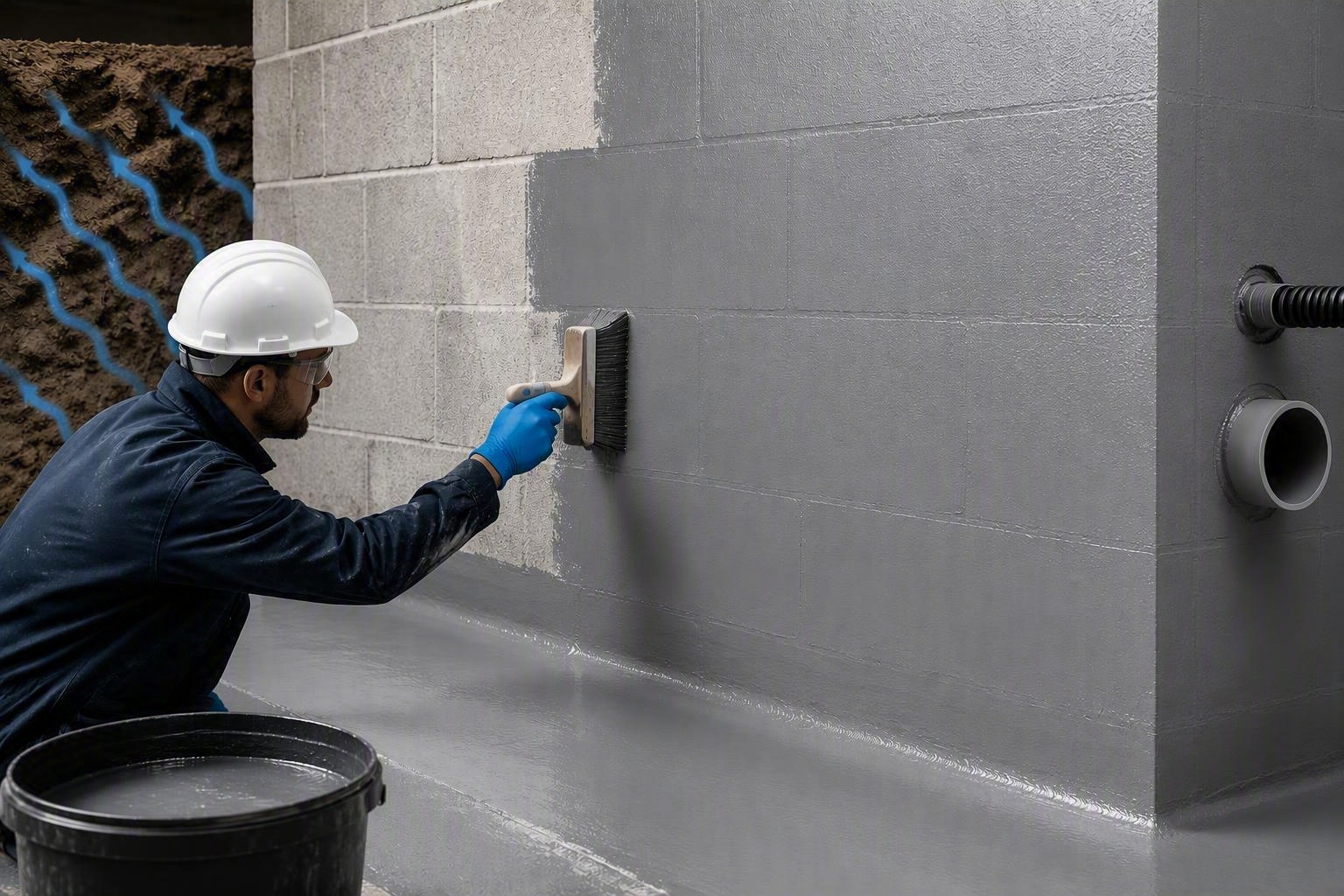
  1. Flexible, seamless liquid-applied barrier providing protection against methane, radon, CO₂, hydrocarbon vapours, and moisture for below‑ground structures such as basements, cellars, and floor slabs. This advanced solution is known as a Liquid Gas Membrane.
  2. Water-based, low‑VOC membrane ideal for confined or occupied environments, serving as a resilient pre‑screed layer over damaged or porous floors before applying cementitious or latex self‑levelling screeds.
  3. Versatile damp and moisture control solution suitable for masonry substrates including brick, block work, and stone, and offering a practical liquid-applied alternative where sheet membranes are difficult to install.
  4. Durable internal waterproofing and containment lining for wet rooms, bathrooms, kitchens, agricultural silage pits, and industrial effluent tanks, applied by brush, roller, or airless spray in a grey finish.

Technical Overview

Newton Liquid Gas Membrane is a single‑component, liquid‑applied barrier designed to provide reliable protection against ground gases and moisture. Suitable for concrete, screeds, brickwork, blockwork, stone, and plaster, it can be applied to walls, floors, and ceilings using a brush, roller, or airless spray. The membrane is installed in two coats, achieving a total dry film thickness of 0.6 mm, with a 15 kg unit covering approximately 10.5 m².

Once cured, it forms a flexible, seamless layer that resists methane, radon, carbon dioxide, hydrocarbon vapours, and water ingress. This makes it ideal for below‑ground gas and damp protection, pre‑screed preparation on porous or damaged floors, and moisture control on masonry substrates. Its liquid‑applied nature provides a practical alternative to sheet membranes, especially where detailing or access limitations exist. It also performs effectively as an internal waterproofing layer beneath tiled finishes in wet rooms and as a protective lining for agricultural and industrial containment such as silage pits and effluent tanks.

The membrane is supplied in grey, has low VOC content, and cures quickly depending on temperature – typically touch‑dry within an hour at 20°C and fully cured within 3 – 5 days. It offers strong adhesion to prepared concrete, high elongation for flexibility, and very low permeability to water vapour and ground gases, ensuring long‑term performance in demanding environments.

  • Ancillary Products
  • Key Benefits
  • Typical Applications & Rates
  • Technical Data
  • FAQs
  • Ancillary Products

    Ancillary Products

    Key Benefits

    Key Benefits

    • Rapid drying, touch-dry in an hour
    • Flexible, accommodates minor substrate movement and bridges hairline cracks
    • Resists methane, radon, CO₂, and hydrocarbon vapours
    • Screed-compatible, suitable for use beneath both cement-based and latex self-levelling screeds
    • Solvent-free – water-based formulation with no VOCs
    • Versatile application, suitable for both horizontal and vertical surfaces, above or below ground
    • Easy-to-apply, brush, roller, or airless spray

    Typical Applications & Rates

    Typical Applications & Rates

    Typical Applications

    • Gas and damp-proofing for below-ground structures, including basements, cellars, and floor slabs, to prevent the ingress of ground gases and moisture

    • Pre-screed preparation, providing a resilient base layer over damaged or porous floors before the application of cementitious or latex-based self-levelling screeds

    • Moisture barrier on masonry substrates, suitable for use on brick, block work, or stone to limit water vapour transmission

    • Liquid-applied alternative to sheet membranes, offering a seamless solution for damp and gas control where detailing or access limitations make sheet systems impractical

    • Internal waterproofing layer beneath tile systems in wet rooms, bathrooms, kitchens, and other intermittently wet areas

    • Protective lining for agricultural and industrial containment, including silage pits and non-potable sewage or effluent tanks.

    Application Rates

    To achieve the required dry film thickness of 0.6 mm:

    • Number of coats – two

    • Application rate per coat – 0.7 kg

    • Wet film thickness per coat – 0.55 mm

    • Wet film thickness over two coats – 1.1 mm

    • Dry Film thickness over two coats – 0.6 mm

    • Coverage for 15 kg unit – 10.5 m²

    Technical Data

    Technical Data

    Features  Result
    Form – Single Component Liquid
    Colour Grey
    Pack Size 15 Kg
    Shelf Life 12 Months
    Pot Life @ 20ºC 30 Minutes
    Application rate – per coat – two-coat application 0.7 Kg/m2
    Application Temperature +5 ºC to + 35 ºC
    Service Temperature As substrate applied to
    Odour Mild latex. Odourless when dry
    VOC Content  <5 g/litre


     Cured Performance  Result
    Adhesion strength – prepared concrete 1.1 N/mm2
    Elongation at break % ASTM D2370
    Water (liquid) resistance – positive side >20 m Internal laboratory hydrostatic pressure test (concrete substrate)
    Water vapour permeability <0.5 g/m2/day EN ISO7783
    Methane permeability <25 ml/m²/day/atm EN ISO 15105-1
    Carbon dioxide permeability <260 ml/m²/day/atm EN ISO 15105-1
    Radon permeability <9.0 x10⁻¹²m2/s Two-chamber steady-state radon diffusion method
    Reaction to fire F EuroClass


    FAQs

    FAQs

    Is Liquid Gas Membrane suitable as a gas protection membrane?

    Yes. Newton Liquid Gas Membrane is specifically formulated to resist the ingress of methane, radon, carbon dioxide, and hydrocarbon vapours, providing a seamless liquid-applied gas barrier to floors, walls, and other construction elements. 

    Can Liquid Gas Membrane be used as a damp-proof membrane (DPM)?

    Yes. Once cured, the membrane acts as an effective damp-proof membrane, helping to prevent the passage of ground moisture and water vapour through the structure. 

    Can Liquid Gas Membrane be applied to damp substrates?

    Yes. The membrane can be applied to damp substrates, following correct preparation. standing or pooled water must be removed before application. 

    Is Liquid Gas Membrane suitable for Type A waterproofing?

    No. Liquid Gas Membrane is not intended to be used as a standalone Type A waterproofing system in accordance with BS 8102:2022. Where waterproofing of below-ground structures is required, a suitable Newton HydroCoat System product should first be installed, with Liquid Gas Membrane then applied as the gas and vapour control layer. 

    Can Liquid Gas Membrane resist water pressure?

    Liquid Gas Membrane is primarily designed as a gas, vapour and damp-proof membrane rather than a waterproofing system. Although the cured membrane has been laboratory tested to 2 bar water pressure, this testing was not carried out to a DIN Standard. For below-ground waterproofing applications, a dedicated Newton HydroCoat waterproofing system should be used internally and the Newton HydroBond System where the Type A membrane is applied externally.

    Is Liquid Gas Membrane suitable for potable water structures?

    No. Liquid Gas Membrane is not approved for use in contact with potable water and should not be specified for potable water tanks, reservoirs, or similar structures. 

    What is the life expectancy of Liquid Gas Membrane?

    When applied in accordance with the Technical Data Sheet and protected within the building structure, the cured membrane is designed to provide a long-term service life consistent with the surrounding construction. 

    How many coats and what thickness does Liquid Gas Membrane require?

    Apply two coats at 0.7 kg/m² per coat to achieve a total wet film thickness of approximately 1.1 mm and a dry film thickness of 0.6 mm. This provides the membrane’s declared gas, vapour and damp-proofing performance. 

    Can installers use Liquid Gas Membrane internally and externally?

    Yes. Liquid Gas Membrane can be used on both horizontal and vertical surfaces, above or below ground. Typical applications include basements, floor slabs, masonry walls, wet rooms, bathrooms, kitchens, and as a liquid-applied alternative to sheet gas membranes where detailing is difficult. 

    What substrates are suitable for Liquid Gas Membrane?

    Liquid Gas Membrane is suitable for application to concrete floors and walls, cement screeds, brickwork, blockwork, stone, and plaster, provided the substrate is sound, stable, and correctly prepared. 

    Can Liquid Gas Membrane be applied beneath screeds?

    Yes. The membrane is suitable for use beneath cement-based and latex self-levelling screeds. For best results, kiln-dried sand can be broadcast into the membrane whilst tacky to provide a mechanical key for the screed. 

    Is Liquid Gas Membrane solvent-free?

    Yes. Liquid Gas Membrane is a water-based, solvent-free formulation with very low VOC content, making it suitable for use in confined or occupied environments. 

    Speak to our friendly, expert team

    Our staff are able to provide guidance for projects of all sizes, whether you require some general advice about damp or waterproofing, or support with technical drawings and specifications.


      By submitting your details you confirm that you agree to the storing and processing of your personal data by Newton Waterproofing as described in the privacy statement.