01732 496 523

HydroBond 2K-Flex

  1. Radon-Certified Strength: HydroBond 2K-Flex, certified for radon gas, is a bitumen waterproofing membrane which forms a reinforced, flexible barrier against water ingress. Moreover, it is ideal for external waterproofing. As a result, it quickly seals cracks and joints in earth-retaining structures, including basements and foundation walls.
  2. Flexibility and Durability: Solvent-free, this reinforced bitumen membrane, upon mixing, forms a highly flexible coating. Furthermore, it can be applied by trowel or airless spray for installation efficiency. In addition, it bonds insulation to concrete, masonry, and cured bituminous surfaces. Consequently, the membrane dries quickly and becomes rain-fast within a short period.
  3. Complete Defence, Quick Dry: HydroBond 2K-Flex is a high-performance bitumen waterproofing membrane that ensures rapid waterproofing. As such, it is ideal for securing insulated panels.
    In addition, it works seamlessly with HydroBond 2K-Flex Primer and Mesh, delivering a comprehensive, durable, long-term solution.

Designed for demanding site conditions, HydroBond 2K-Flex can be applied to a thickness of up to 8 mm. Additionally, it bridges cracks up to 2 mm once cured. Furthermore, the membrane resists aggressive ground contaminants. At the same time, it accommodates minor structural movement. Suitable for use in accordance with DIN 18533 classifications, it forms part of the Newton HydroBond System for Type A waterproofing to BS 8102:2022.

Bitumen Waterproofing Membrane – Technical Overview

A radon gas-certified, bitumen waterproofing membrane is used primarily for the external waterproofing of earth-retaining structures. Once cured, it forms a thick, seamless barrier that remains highly flexible and accommodates minor structural movement.

HydroBond 2K-Flex consists of two components, a bitumen emulsion and a reactive powder. When mixed, these components chemically react to create a durable bitumen membrane coating. It adheres effectively to prepared concrete, masonry, and thoroughly dried thick bituminous coatings, offering fast curing and early weather resistance performance.

Install HydroBond 2K-Flex with two ancillary products: HydroBond 2K-Flex Primer and HydroBond 2K-Flex Mesh. This ensures consistent reinforcement and long-term waterproofing performance.
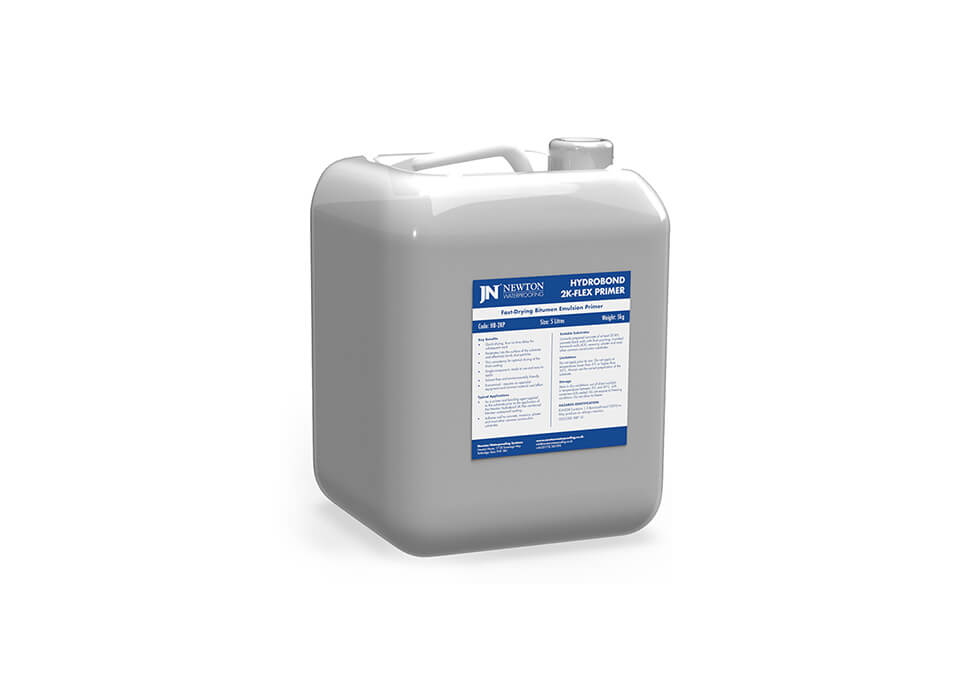
HydroBond-2K-Flex-Primer_5ltr

HydroBond 2K-Flex Primer

A fast-drying bitumen emulsion primer and bonding agent that is applied to the substrate prior to the application of the Newton HydroBond 2K-Flex reinforced bitumen waterproof coating. The product adheres well to concrete, masonry, plaster and most other common construction substrates.

HydroBond-2K-Flex-Mesh

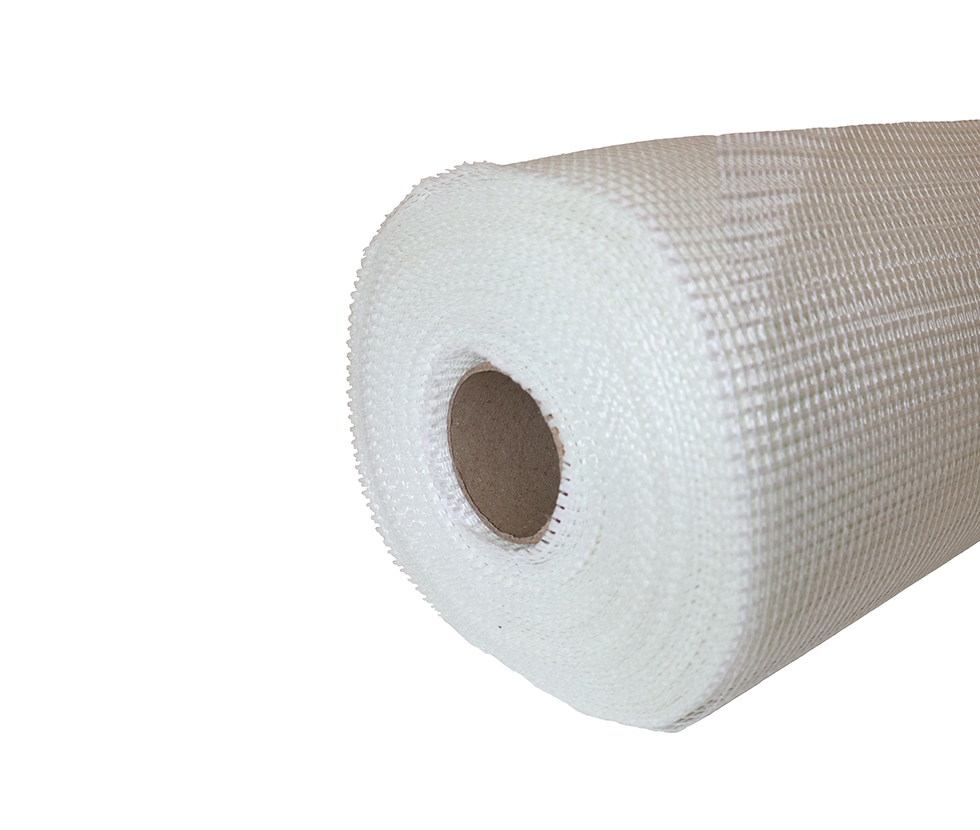
HydroBond 2K-Flex Mesh

A reinforcing mesh made from woven fibreglass yarns and coated with an alkaline resistant latex which prevents the alkaline present in cement from degrading the glass fibre.

  • Key Benefits
  • Typical Waterproofing Applications
  • Technical Data
  • FAQ
  • Key Benefits

    Key Benefits

    • Thick coating, fully-bonded seamless waterproofing membrane with excellent crack-bridging capabilities.
    • Particularly easy trowel application due to low material weight.
    • Fast reaction time due to the special powder catalyst.
    • Highly flexible with 2 mm crack bridging due to high-quality polystyrene and polymer modification.
    • Quick-drying and rain-fast after a short period.
    • Solvent-free, non-toxic and odourless.
    • Non-flammable – No VOCs.
    • Radon gas resistance.
    • Sprayable with suitable equipment.
    • Adheres insulating panels to concrete, masonry and thoroughly dried thick bituminous coatings.

    Typical Waterproofing Applications

    Typical Waterproofing Applications

    • Continuous Type A waterproofing and radon protection of retained structures, together with Newton HydroBond pre-applied membranes.
    • Type A waterproofing and radon membrane for basement, foundations and earth-retained walls.
    • Smoothing of irregular surfaces prior to application of bitumen-based membranes.

    Technical Data

    Technical Data

     Cured Performance  Result
    Colour Black
    Membrane thickness – two coats  4.0 mm
    Compressive strength – Class C2A 0.30 MN/mm2
    Crack bridging ability (no reinforcement) – Class CB2  >2 mm
    Resistance to fatigue movement – 1000 actions @ -10°C  Pass
    Dimensional stability at high temperature – no sliding  Pass
    Flexibility at low temperature  Pass
    Water vapour resistance – SD value  26.3 m
    Water vapour resistance – μ value 6575 μ
    Water vapour resistance  132 MNs/g
    Water tightness -W2A  0.075 N/mm2
    Water resistance – 21 days at 21°C  Watertight
    Durability of water tightness and fire behaviour  Pass
    Radon gas diffusion resistance (4 mm membrane)  1.13 x 10⁻¹¹ m2/s
    Reaction to fire classification (Euroclass) E

    FAQ

    FAQ

    What is a reinforced bitumen waterproofing membrane?

    A reinforced bitumen waterproofing membrane is a flexible, bitumen-based coating strengthened with reinforcement to resist water ingress and structural movement.

    Where should a flexible bitumen waterproofing membrane be used?

    Flexible bitumen membranes suit below-ground structures, foundations, basements, and retaining walls where movement and crack-bridging capability are required.

    How does a reinforced bitumen membrane differ from cementitious waterproofing?

    Bitumen membranes remain flexible after curing, while cementitious systems cure rigid. This makes bitumen better suited to movement-prone structures.

    Can the bitumen waterproofing membrane bridge cracks?

    Yes. The reinforced membrane accommodates minor cracking and structural movement without compromising waterproofing integrity.

    Can this membrane be applied to vertical and horizontal surfaces?

    Yes. Installers can apply the membrane to both vertical and horizontal substrates, including walls, slabs, and foundations.

    Is the membrane suitable for below-ground waterproofing?

    Yes. The system provides reliable waterproofing for earth-retained structures when correctly specified and protected.

    Does the membrane require protection after application?

    Yes. Newton recommends protecting the membrane with suitable protection boards or finishes after curing.

    Can the bitumen membrane form part of a Type A waterproofing system?

    Yes. The membrane can form part of a Type A waterproofing system when designed in accordance with BS 8102:2022.

    Speak to our friendly, expert team

    Our staff are able to provide guidance for projects of all sizes, whether you require some general advice about damp or waterproofing, or support with technical drawings and specifications.


      By submitting your details you confirm that you agree to the storing and processing of your personal data by Newton Waterproofing as described in the privacy statement.