01732 496 523

The Submersible Pump & Basement Waterproofing
A submersible pump is at the heart of a basement sump pump system. It actively collects, lifts, and discharges groundwater that enters the drainage channels, ensuring water is safely directed away from the structure.
As part of a Type C (drained protection) waterproofing system, the pump delivers consistent and efficient performance. At the same time, it maintains full compliance with BS 8102:2022, providing dependable protection for both domestic and commercial basements.
Where site levels allow (for example, a semi-basement set within sloping ground), it is possible to remove the collected groundwater by gravity. This can be done to a collection point below the basement. Full basements that are earth-retaining to all elevations will always require a pumping system.
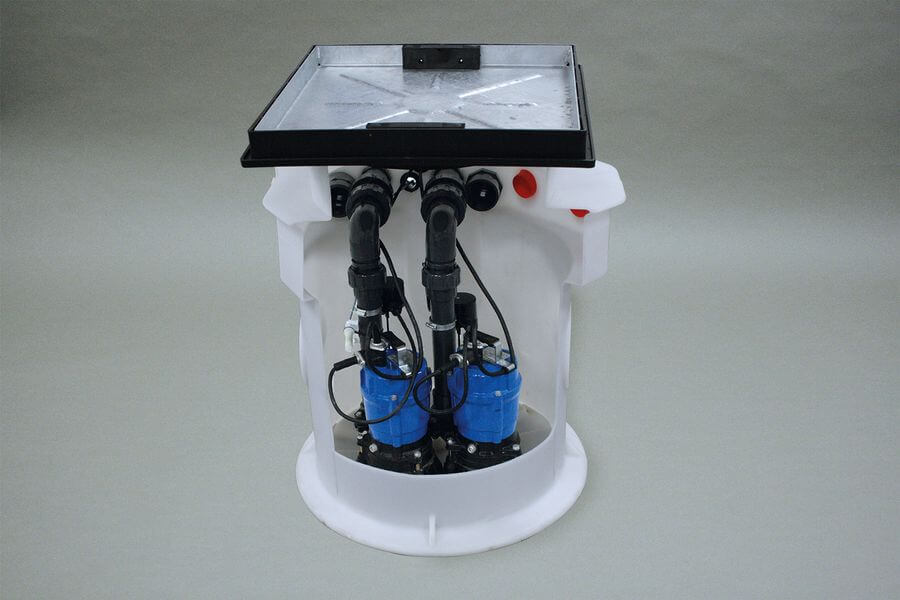
How a Submersible Pump Works
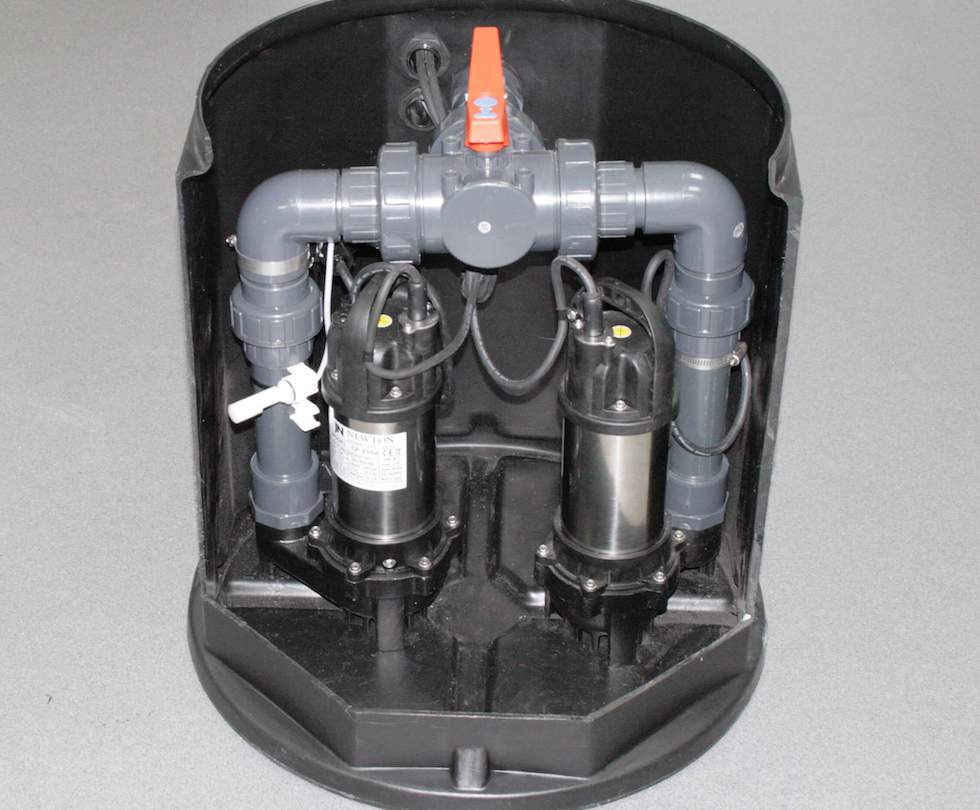
A submersible pump is a fully enclosed pumping unit that operates underwater within a sump pump chamber (also referred to as a sump chamber). It contains an integrated, watertight electric motor that drives an impeller. This lifts and discharges groundwater through dedicated pipework to a safe external discharge point.
Once the water level within the chamber reaches a set height, float switches automatically activate the pump. This removes the water within the chamber and protects the chamber’s internal environment. Unlike other types of pumps, such as pedestal pumps, a submersible pump functions entirely below the water level. This allows efficient, quiet, and continuous operation.
This makes it the most effective choice for maintaining a dry, habitable, and protected below-ground environment.
Submersible Pumping Systems for Type C Waterproofing
In a Type C drained cavity protection design, groundwater control is achieved by either gravity drainage. This occurs where a compliant fall to a lower outfall is feasible. When a gravity-based approach is not feasible, a full sump pump system is installed. Pumping solutions are therefore designed as reliable, maintainable basement sump pump systems.
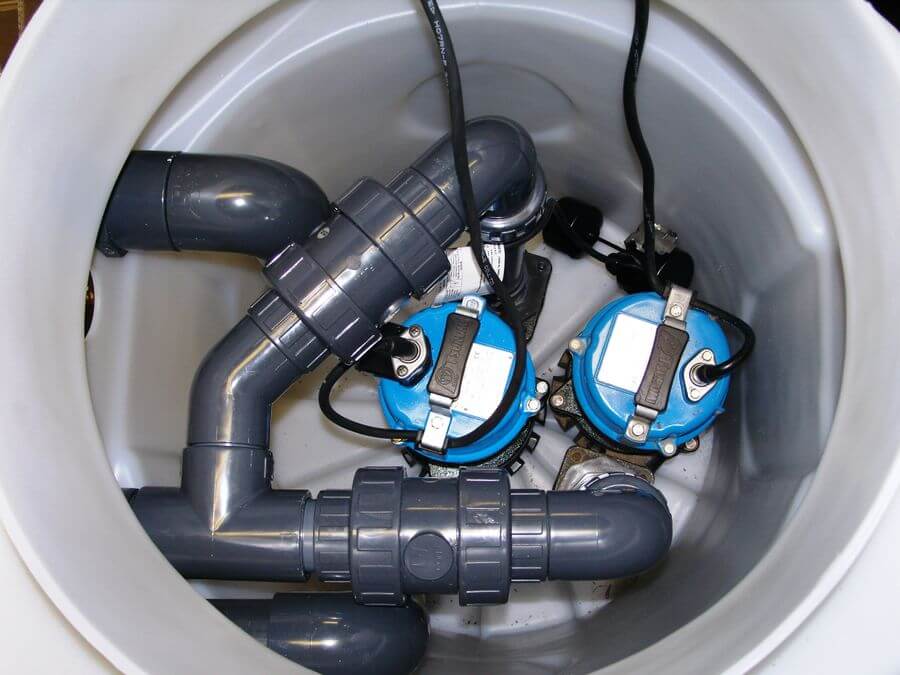
These systems are not standalone pumps but complete, engineered assemblies that combine sump chambers, submersible pumps, pump controllers, control panels, and monitoring technology to deliver continuous protection from water ingress.
We design and supply fully integrated submersible pumping systems as part of our Newton CDM System. These systems are specified to meet BS 8102:2022 requirements, providing long-term assurance for specifiers, contractors and property owners alike.
Each system is built around a coordinated set of components:
- Sump chamber – purpose-designed to house pumps and facilitate maintenance access.
- Submersible pump – dual pumping units providing quiet, efficient and reliable water removal.
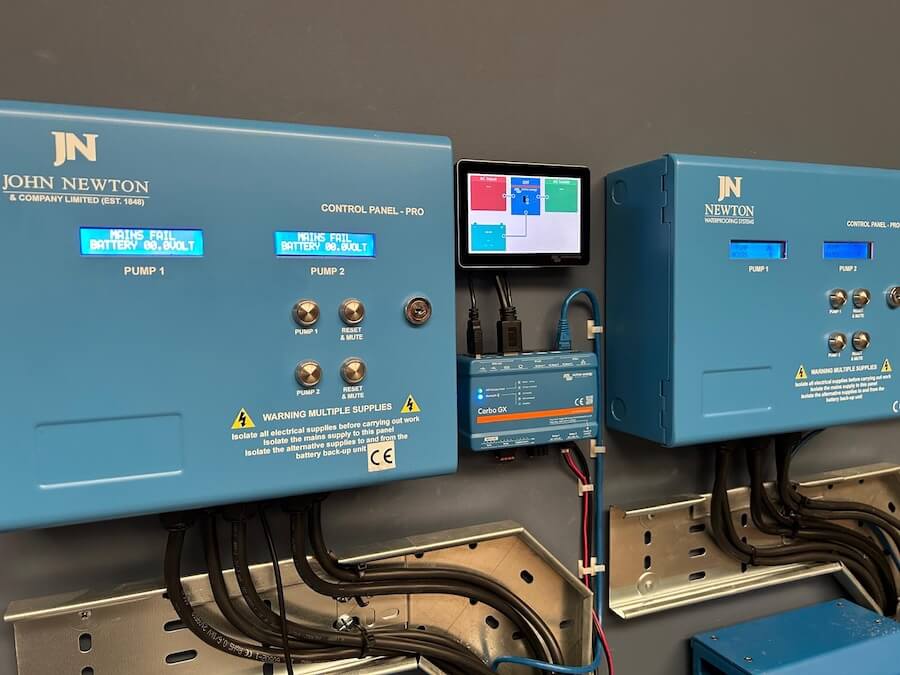
- Pump control panels – required for the control of manual pumps and providing greater control of pumping operations, including features such as weekly pump operation.
- Discharge assemblies – sized for optimum head height and flow rate.
- Monitoring options – including the Newton Cloud, a smart pump monitoring system providing real-time status and servicing alerts.
Together with the other components of the Type C waterproofing system, these elements form a maintainable system that can provide the required level of waterproofing performance for the lifetime of the building.
Designing and Specifying Submersible Pumping Systems
Proper system design is vital for maintaining compliance with BS 8102:2022 and for ensuring reliable, long-term protection against groundwater ingress. Submersible pumps should always be designed and specified during RIBA Stage 3, ensuring seamless integration with the wider waterproofing strategy.
When designing, several key factors must be considered:
- Flow and Capacity – Measured in litres per minute or cubic metres per hour, the flow rate indicates the volume of water the pump can move. Pumps must be correctly sized sized to handle the maximum anticipated inflow, with suitable margins for redundancy for safety.
- Head Height and Discharge Route – The vertical lift from the pump to the final discharge point must be accurately calculated to maintain efficient system performance and prevent overloading.
- System Redundancy and Backup – Best practice is to install dual submersible pumps with automatic duty-standby changeover. Backup power options, such as battery systems, will safeguard the pumps and ensure continued performance during power outages.
- Monitoring and Maintenance – Integration with the Newton Cloud provides real-time, remote visibility of system status, pump operation, alarm alerts, and predictive maintenance insights. The result is to minimise downtime and ensure long-term reliability.
For contractors and installers, accurate sizing and redundancy are crucial when working to BS 8102:2022. These steps must also be supported by a full risk assessment. Contact our technical team for tailored advice and further information.
Titan-Pro Sump Chambers
We supply a full range of basement sump pump systems of every scale. Our Titan-Pro range of packaged sump pump systems represents the benchmark in professional basement water pump system design for below-ground structures. Each system is engineered for seamless integration with the Newton CDM System, ensuring reliability and compliance throughout the entire design, installation, and operation process.
Why choose the Titan-Pro range of Sump Chambers & Submersible Pumps?
- BS 8102-compliant performance for Type C drained protection
- Twin duty-standby configurations with automatic changeover
- Wide capacity range to suit both domestic and commercial environments
- Full compatibility with the Newton Cloud for remote monitoring
- Comprehensive design support from our CSSW-qualified technical team
Explore our full Titan-Pro sump pump range to find the ideal solution for your project.
BS 8102:2022 requires that the structure itself limit water ingress so that the Type C system is not overworked. For this reason, Newton pumps are not selected solely based on water volume. Instead, they are chosen according to the correct head height and operating point, ensuring that each pump runs close to its Best Efficiency Point (BEP).
As a result, the system delivers maximum reliability, energy efficiency, and long-term protection. Contact our team for detailed specification guidance.
Why Correct Pumping System Design Matters
While not all waterproofing designs rely on pumps, such as Type A (barrier protection), Type B (integral protection), or gravity-drained semi-basements, Type C systems are often installed with a dual pump system. Consequently, Type C systems are often influenced by the proper design, specification, and maintenance of their pumping systems. An incorrectly designed or undersized system can compromise the drained cavity protection, increasing the risk of water ingress, maintenance issues, or non-compliance with BS 8102:2022.
By specifying a Newton submersible pumping system, architects, engineers, and contractors can ensure a robust, maintainable, and fully supported design backed by more than 175 years of waterproofing expertise.
Specify Submersible Pumps with Confidence
From early design input through to installation and aftercare, Newton provides full technical design support, CAD support, and product integration guidance.
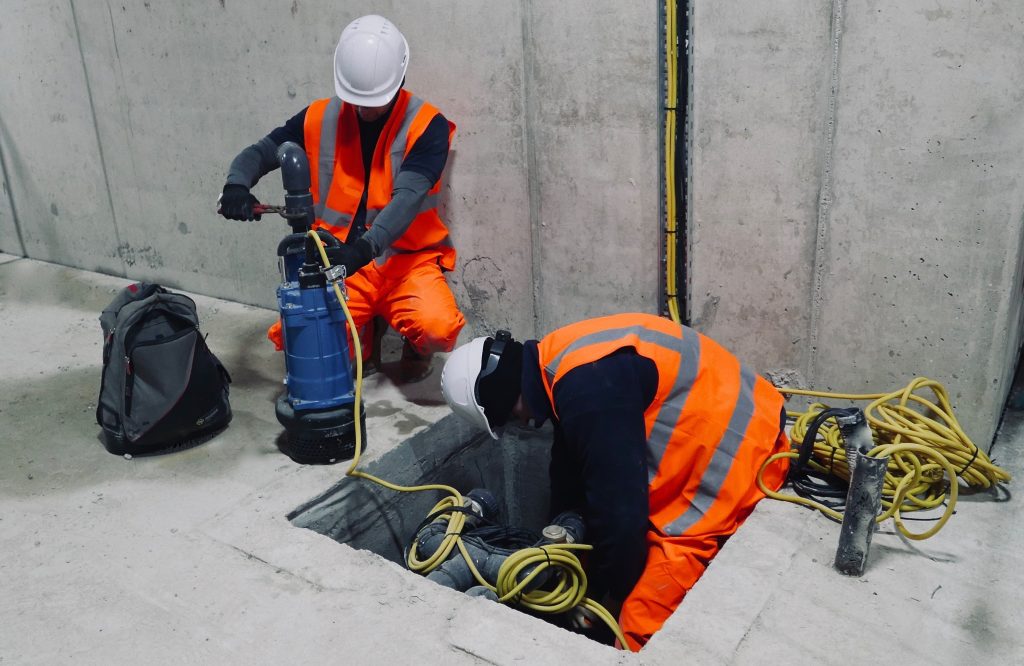
To specify a BS 8102-compliant Type C waterproofing system that includes a submersible pumping system for your project, contact our technical team or find your nearest NSBC-certified contractor

Expert Installations by our Nationwide Network of Newton Specialist Basement Contractors.


Pass the Waterproofing Design Liability to Newton and our network of contractors
Speak to our friendly, expert team
Our staff are able to provide guidance for projects of all sizes, whether you require some general advice about damp or waterproofing, or support with technical drawings and specifications.