01732 496 523

When you’re a homeowner looking for a new house, it’s important to ensure that your property is safe. If an area of the UK has high radon gas levels or a building’s basement is regularly used as a habitable space, you can deem the property to be ‘at risk’. Radon gas protection for basements is vital.
For new-build residential properties, the building company will be responsible for safeguarding against high radon levels and must install protective measures in accordance with building regulations. For residential homebuyers, it is advisable to check if the property is in a high-risk radon area and either find out if testing has previously been done or, if required, carry out testing of their own.
New-build case study: Concrete Basement Radon Gas Protection

What is Radon Gas?
Radon is a radioactive gas. It is colourless, odourless, and naturally occurs below ground level across the world. Previously mined areas commonly contain radon, which seeps through cracks in rock and soil layers and penetrates properties at ground floor level.
Authorities classify radon gas as a hazardous substance. In high concentrations, it can significantly affect interior air quality and can often accumulate in basements. Excessive radon exposure has direct links to an increased risk of lung cancer. Epidemiological studies suggest that exposure to radon gas is the second biggest contributing factor to lung cancer deaths after cigarette smoke. In non-smokers, it is the largest contributing factor.
Existing basement case study: Treating Radon in a Listed Building
Is my Property at Risk from Radon Gas?
Small levels of radon exist throughout the country. The average radon levels in UK homes is 20 Bq/m3 (becquerels per cubic metre of air). An interior environment is considered to have safe levels of radon if they do not exceed 100 Bq/m3.
Before testing for radon, get a Radon Risk Report to see if your property is in a high-risk area. If your residential or commercial property lies in a high-risk area, you must conduct a test.
How to Protect my Basement from Radon Gas?
Any property with a below-ground basement area requires protection from both water ingress and radon gas. Section 6:12 of BRE Report BR 211, Radon: Guidance of Protective Measures for New Buildings, states that all basements are at an increased risk regardless of location and therefore that radon should be taken into account during the design and implementation of waterproofing systems.
After measuring ground gas and water ingress levels through a site investigation, BS 8102:2022 recommends bringing a Waterproofing Specialist onto the project. These should be on the Waterproofing Design Specialist register or at least have a Certified Surveyor of Structural Waterproofing (CSSW) qualification. A waterproofing specialist will work with you to determine the Grade of waterproofing required for the below-ground space and design a waterproofing solution for that desired Grade.
You can then upgrade this solution to protect against high radon concentrations and other ground gases.
The different grades of waterproofing: What is a Dry Basement?
As part of the site investigation, a gas screening value site survey (GSV) will determine the CS value, or ‘threat level’, posed by ground gases, including radon, methane, and carbon dioxide. You can then use the CS value to calculate the minimum gas protection score required for the project.
Our technical article Creating a Barrier Against Both Gas and Water goes into this in more detail.
Protective Measures to Reduce Radon Levels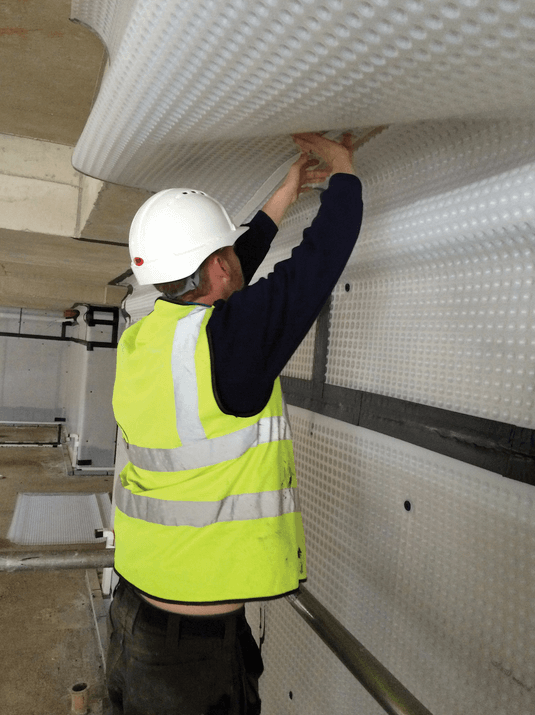
Dependent on the radon levels revealed during a site investigation, a plan of action can be put in place. For properties with radon levels above the maximum threshold, action level measures are required to minimise the health risks associated with radon. Newton Waterproofing can supply gas-certified variants of our waterproofing products to deliver a comprehensive solution for your basement that protects from water and ground gases, achieving the minimum gas protection score.
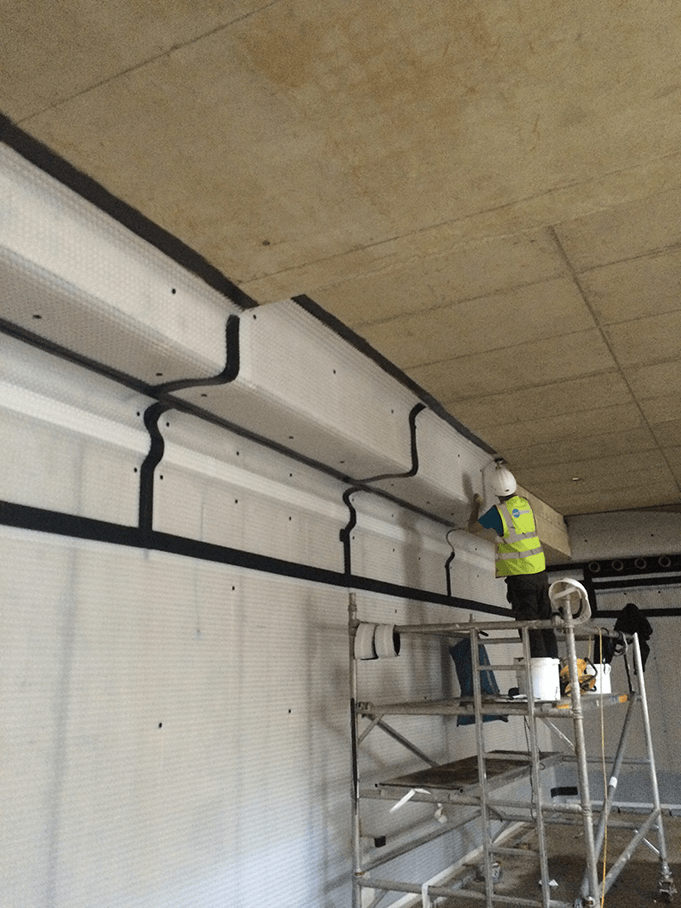
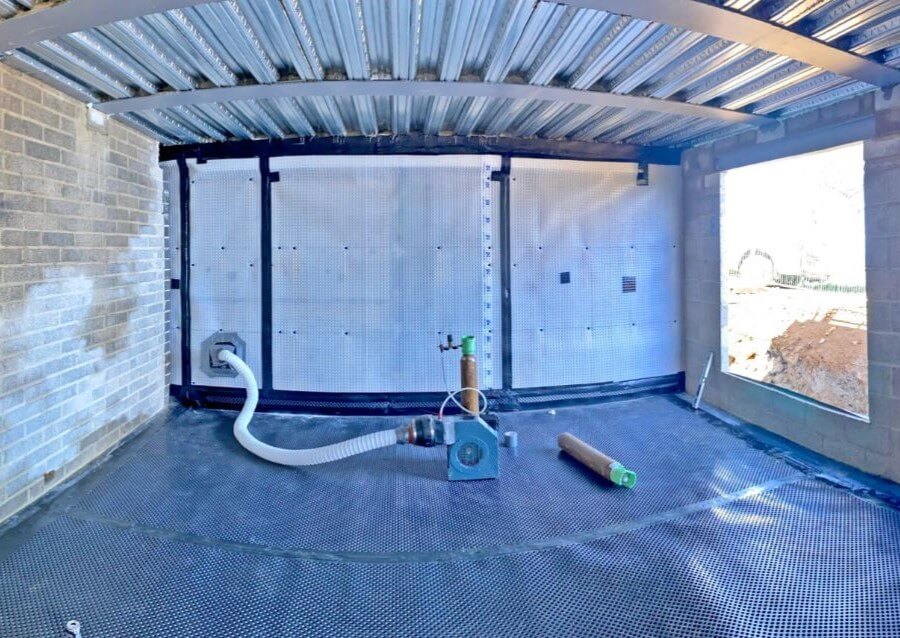
The Newton PAC (Positive Air Curtain) 500 System successfully controls both water and gas levels by combining the Newton Cavity Drain Membrane (CDM) System, installed by a Specialist Basement Contractor, and a positive pressure air delivery system, installed by Prestige Air Technology. The system includes the durable Newton 508 membrane and its associated jointing and sealing products, all of which have third-party testing data for radon resistance.

Below-ground waterproofing and radon management are specialist activities that can conflict. Specialists suitably qualified in both waterproofing and radon management should design and install dual protection systems. Section 6.12, BR 211, 2015
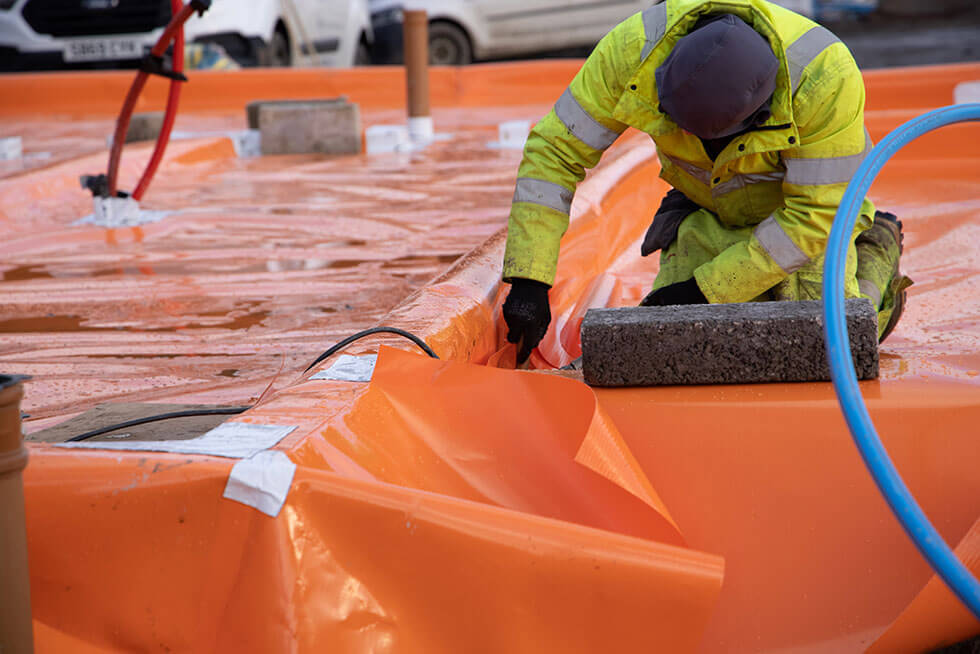
Newton can also supply a gas barrier variant of HydroBond 403 Plus, a BDA certified and NHBC accepted Type A waterproofing membrane that provides resistance to radon, carbon dioxide, and hydrocarbons. Depending on the Grade of waterproofing required for your basement, HydroBond 403 Plus-GB, the Newton Hydrotank System, and the Newton PAC-500 System can be used in combination with a variety of other Newton waterproofing products to achieve the level of protection you need.
Download our flow chart to explore Newton’s water and gas proofing solutions for below-ground radon protection.
DOWNLOAD THE RADON FLOW CHART HERE
FAQ
Should I worry about radon gas?
Yes, it is important to take radon gas seriously. Radon naturally occurs in many places and causes lung cancer in non-smokers, along with other health problems. Test your home’s indoor air for radon and reduce levels if high.
Where is radon gas most commonly found?
Soil and rocks beneath buildings commonly contain radon, which can seep into buildings through cracks, gaps, or other foundation openings. Radon can also enter through well water.


Expert Installations by our Nationwide Network of Newton Specialist Basement Contractors.


Pass the Waterproofing Design Liability to Newton and our network of contractors
Speak to our friendly, expert team
Our staff are able to provide guidance for projects of all sizes, whether you require some general advice about damp or waterproofing, or support with technical drawings and specifications.