01732 496 523

This page will clearly communicate what basement tanking effective waterproofing methods are. It will also explain the potential benefits of this waterproofing system for architects, specifiers, and property owners.
What is Basement Tanking?
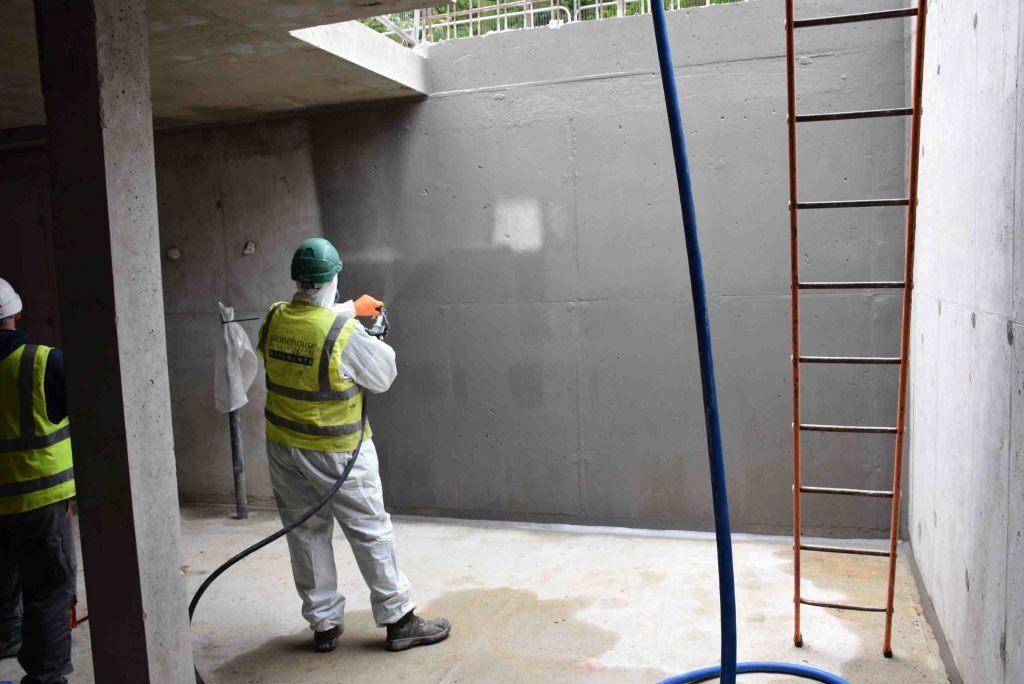
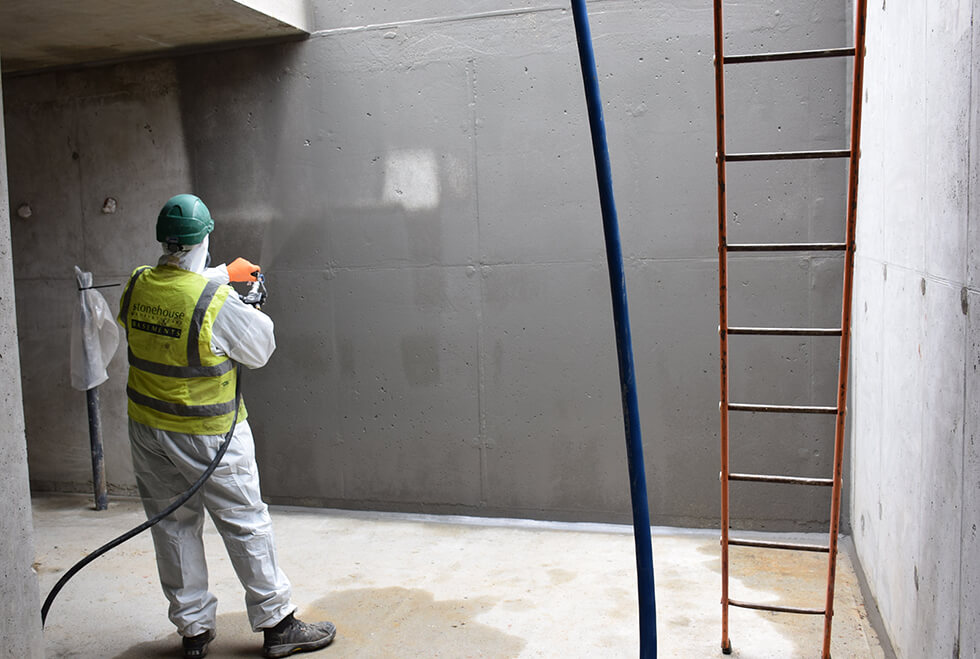
Basement tanking, otherwise known as ‘Type A’ waterproofing, is the application of a membrane or coating to the inside or outside of a structure. This creates a waterproof barrier and stops water ingress from entering the habitable space of the property. It makes the basement watertight.
For tanking to be successful, it must be applied to walls and floors which are in a sound and stable condition. Additionally, the flow of free water must be reduced as much as possible prior to application.
It is also important that attention is given to the weaker points within the structure. Areas that may be more susceptible to water ingress include the floor to wall junction. Other construction joints or service penetrations are also susceptible.
There are, however, some instances where tanking directly onto the surface is not the appropriate solution. This could be due to a poor wall surface which may not allow the waterproof coating to create a strong bond, or if there is evidence of excessive movement in the substrate which may cause cracking in the tanking membrane in future.
Type C Waterproofing
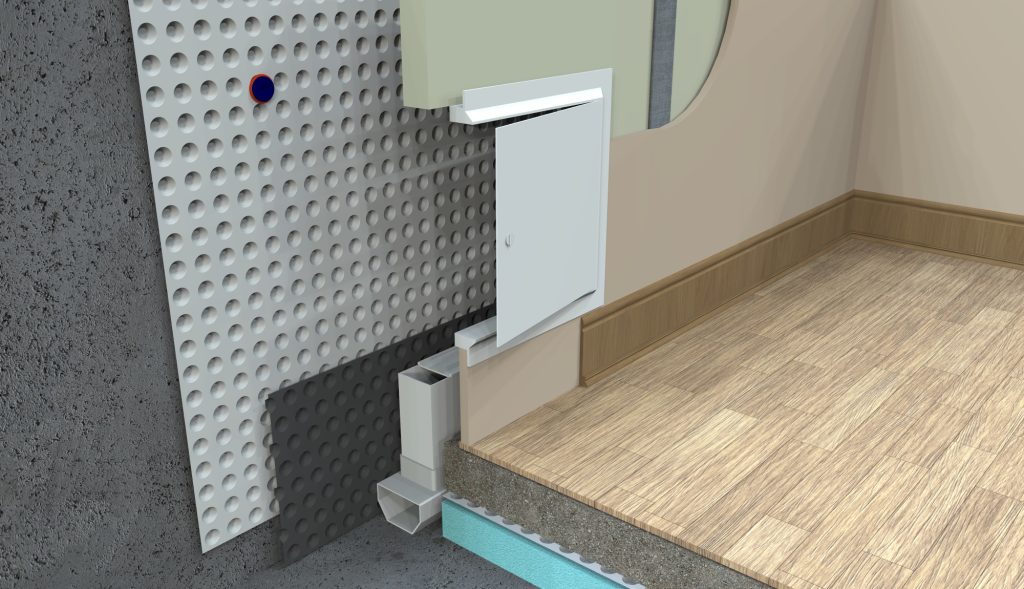
If a tanking system is unviable or if it is defective due to poor installation, preparation, or impact damage, water will enter the structure. This will compromise the internal habitable space. By contrast, because a ‘Type C’ waterproofing system does not resist the pressure of water ingress, it is much less susceptible to these issues. It is generally considered the safest form of waterproofing.
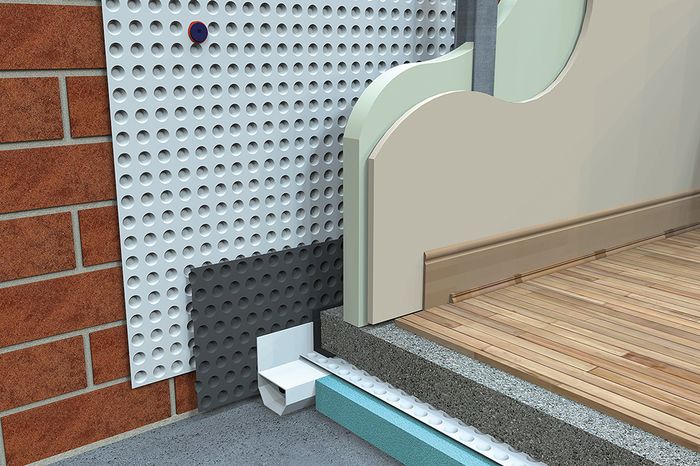
British Standard 8102:2022 defines Type C waterproofing as “drained protection” where water leaking through the structure is accepted into voids and air spaces. These are created by cavity drain membranes. They are strategically placed to the inside of the structure. The system captures, depressurises, and safely removes the incoming water from the property.
A combination of our decades of basement waterproofing experience with our industry-leading products, the CDM System is Newton’s Type C waterproofing solution. It includes a range of BBA certified cavity drain membranes. These can be coupled with the bespoke sump and pump configurations, backup systems, telemetry, and ancillary options. These features make it the most reliable and maintainable waterproofing solution for any habitable space below ground.
Combination Waterproofing
For more robust waterproofing protection, BS 8102:2022 recommends combining two or more Types of waterproofing. Therefore, the Newton CDM System can be combined with our Type A Newton HydroBond or Newton HydroCoat tanking systems. Additionally, it can be combined with our Type B Newton HydroTank system.
Our Technical Team will work with you to design the right combination of structural waterproofing methods. This will ensure that the end user’s desired internal environment is achieved. Moreover, it complies with current legislation and best practice.
Professional waterproofing designers should always consider using more than one type of waterproofing. This approach provides enhanced protection to the structure. It is crucial where there is a high risk of not achieving the desired grade of internal environment.
When is Basement Tanking Not Appropriate?
There are occasions when a tanking membrane is not the appropriate solution, such as:
- In listed or historic structures, as tanking membranes create a monolithic bond with the structure and may not be deemed as ‘reversible’ by a conservation officer
- If a building is expected to receive excessive movement during its lifetime
- Where a weak structure is not capable of resisting the head of water pressure that may come to bear against the tanking membrane
- If there are excessive underground vibrations, for example from a railway line
To ensure that the products and systems specified for your waterproofing project are appropriate to the structure and to achieving the desired internal environment, we always recommend speaking to a qualified waterproofing designer.
For more information and to find the products best suited to your basement tanking requirements, call our technical team on 01732 360095 or email tech@newtonwaterproofing.co.uk.
Speak to our friendly, expert team
Our staff are able to provide guidance for projects of all sizes, whether you require some general advice about damp or waterproofing, or support with technical drawings and specifications.